
- This event has passed.
Data Centers: The Good, The Bad and The Ugly

Join the Austin AI Alliance and the Austin Forum on Technology and Society for a town hall on the realities, risks, and rewards of AI infrastructure. This event is in person only.
Every time you query an AI model, stream a video, or use a cloud app, you’re relying on a massive, invisible engine: the modern data center. As our demand for computing power grows, so does the footprint, the grid strain, and the resources needed to keep it all running. Data centers are essential to the AI revolution and they’re driving real progress for business, healthcare, education, and daily life. But they also raise real questions about our energy grid, our water supply, and our communities.
The Austin Forum’s July 7 presentation covered the technology, costs, and impacts of data centers, and the questions kept coming long after the panel ran out of time. The conversation kept going on LinkedIn too, with professionals from Austin and beyond weighing in. So on August 19, we’re back for round two, and this time, it’s your turn to lead the discussion.
This isn’t another panel talking at you. It’s an extended, moderated town hall built for community members, tech leaders, policymakers, and environmental advocates to talk with each other. Whether you’ve got a concern, a success story, a hard question, or an idea worth testing, this is your platform. We’ll dig into the tough stuff and celebrate what’s working, all in a format built for real conversation, not just presentation.
We’ll confront the hard truths first. A moderator will lead grid analysts, environmental policy experts, and local leaders through the real risks that dense data center development poses to the ERCOT grid, local water tables, neighborhood livability, and utility rates. No spin, just the numbers and the tradeoffs.
Then we’ll look at what’s working. The same group of experts will walk through the architectures proving that data centers don’t have to be a drain on their host communities: closed-loop thermal cooling, on-site power generation, and designs quiet and dark enough that neighbors barely notice they’re there. These low-footprint facilities aren’t just less harmful, they can actually help stabilize the grid and ease pressure on ratepayers.
The goal is practical clarity. Attendees will leave with a real understanding of the tradeoffs at play and the tools to guide better policy, smarter planning, and informed advocacy across Central Texas and the state, positioning the region as a leader in responsible AI infrastructure rather than a cautionary tale.
Come ready to share on four fronts:
- Success stories – How is AI, powered by data centers, already making things better in your work or your life?
- Real concerns – What worries you about grid reliability, water use, land development, or the bigger picture?
- Burning questions – What do you want straight answers on, from the numbers to the timelines to the tech itself?
- Constructive ideas – How can Austin and the broader tech community balance the need for computing power with real responsibility to our resources?
We’ll also draw the line between the data centers doing this right and the ones doing it wrong. Some facilities are straining the ERCOT grid, draining local water tables, and driving up utility rates for everyone nearby. Others are proving there’s a better way, with closed-loop cooling, on-site power generation, and designs that barely make a sound or cast a light. This event will help you tell the difference, and understand why it matters for Austin’s future as a leader in responsible AI growth.
You’ll leave with a clearer picture of where things stand, some real resources to take with you, and new ideas to bring back to your own team or community.
Stick around after. The conversation continues right after the event at Remedy (3rd & Nueces) for networking and a complimentary drink, courtesy of Austin Forum Annual Partners, Champions, and Friends.
Please register at https://www.eventbrite.com/e/the-data-center-dialogue-a-community-town-hall-on-ai-infrastructure-tickets-1995107588504.
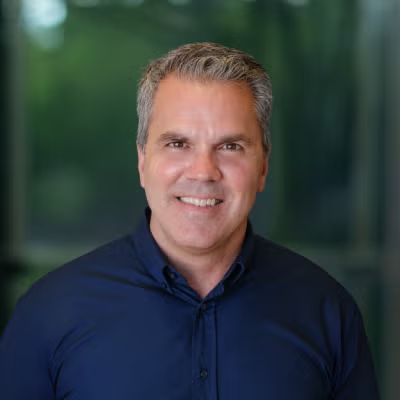
Mark Strama, Director of the Annette Strauss Institute for Civic Life
Mark is the Director of the Annette Strauss Institute for Civic Life, and a Professor of Practice in the Moody College of Communication at the University of Texas. He also co-teaches two courses on civic engagement in UT’s Plan II Honors program, alongside Professor Lee Walker.
Previously, Mark spent ten years at Google Fiber working to upgrade the speed and quality of internet service in the U.S. Prior to that he served five terms in the Texas House of Representatives, where he focused on renewable energy, public education, and electoral reform. Mark received Honorable Mentions on Texas Monthly’s Ten Best Legislators list in three of his five sessions in the House; Texas Monthly said “Strama cares as much about others’ success as his own.”
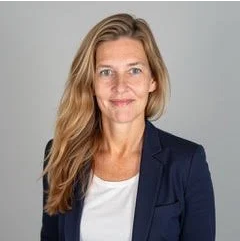
Amy Polvado, Founder and CEO, Facilimax
Amy Polvado is the Founder and CEO of Facilimax, an Austin-based company building AI-powered digital twin software on NVIDIA Omniverse for universities, hospitals, and data centers. She also leads Harmon Labs, a vocational school preparing workers for careers in power plant operations, data center technology, and nuclear energy, and serves as CEO of Red River Infrastructure, developing large-scale data center sites across Texas.
Amy is a doctoral student at Purdue Polytechnic Institute, where her research focuses on deploying digital twins to edge wearable devices for frontline workforce training. She is also Chairwoman of the US Proptech Council, host of the Data Center News Show, and author of From Data to Deals. Her career spans semiconductor manufacturing at Applied Materials and IBM, building a real estate private equity firm to over $1 billion in assets under management, and technology commercialization at UT Austin.

Annie Hardy, Chief AI Architect and Futurist at Split Futures
As the Chief AI Architect and Futurist at Split Futures, Annie Hardy works directly with customers and through partners to rearchitect the cognitive workforce, guiding organizations and workers to a human-centered future where artificial intelligence adoption leads to positive human outcomes. Ms. Hardy is a patent-holding inventor on the topics of artificial intelligence, machine learning, and computer vision, with prior work at Cisco Systems as a Global AI Architect and Futurist among their global AI Infrastructure Partners. Ms. Hardy is a startup advisor, member of the Association of Professional Futurists, and a seasoned thought leader on the topics of artificial intelligence, spatial computing, emerging technologies, enterprise innovation, the future of work, the future of the internet, workplace culture, and AI adoption. Ms. Hardy holds a degree in Communications and Spanish with a focus on Gender Studies from Austin College, and is certified by the Association of Professional Futurists.
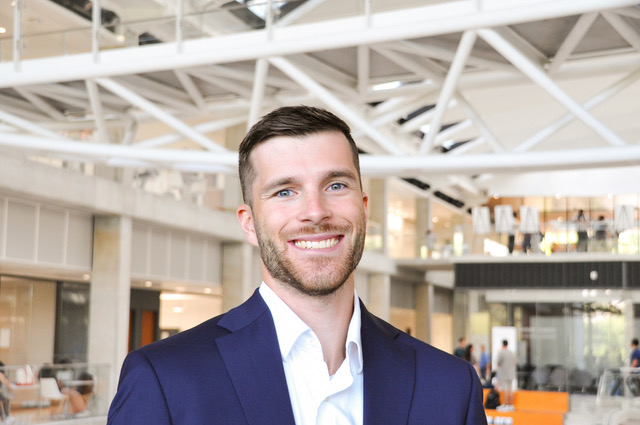
Drew Kassel, Energy Analyst with IdeaSmiths
Drew Kassel is a Postdoctoral Fellow with the Webber Energy Group at the University of Texas at Austin, and an Energy Analyst with IdeaSmiths. In these roles, he consults and conducts research on large-scale energy systems and electric power infrastructure with a particular focus on electricity demand growth, transmission expansion, demand flexibility, and pathways for powering the emerging AI era. His research examines strategies for improving grid reliability and resilience under increasingly probable extreme weather events through the use of robust capacity expansion models and infrastructure planning tools, particularly within the Electric Reliability Council of Texas (ERCOT). His work also explores the role of grid interconnections, distributed energy resources, and utility- and distributed-scale energy storage systems in future grid development scenarios.

Stan Kitzman, State Representative
State Representative Stan Kitzman represents Texas House District 85, a critical rural and suburban corridor encompassing Austin, Colorado, Fayette, Waller, Wharton, and parts of Fort Bend counties. Hailing from Pattison in Waller County and rooted as a sixth-generation Texan descended from Stephen F. Austin’s “Old Three Hundred,” Representative Kitzman represents a vast geography defined by major resource arteries, including the Brazos, San Bernard, and Colorado river basins. As commercial development and digital infrastructure expand across the state, his district sits at the direct intersection of regional growth, critical natural resources, and agricultural heritage.
In the Texas Legislature, Representative Kitzman has emerged as a central leader on resource policy, power reliability, and resource management. He serves on the House Agriculture and Livestock Committee, the House Appropriations Committee (where he chairs the Article III subcommittee), and the Texas Sunset Advisory Commission. Demonstrating his focus on utility and conservation planning, he was chosen by his colleagues to chair the bi-cameral Water Caucus, serves as a Texas representative to the Energy Council, and sits on the board of the Texas Water Conservation Association. Throughout his legislative tenure, he has been a vocal advocate for the long-term future of Texas water security, energy grid resilience, and the protection of production agriculture.