
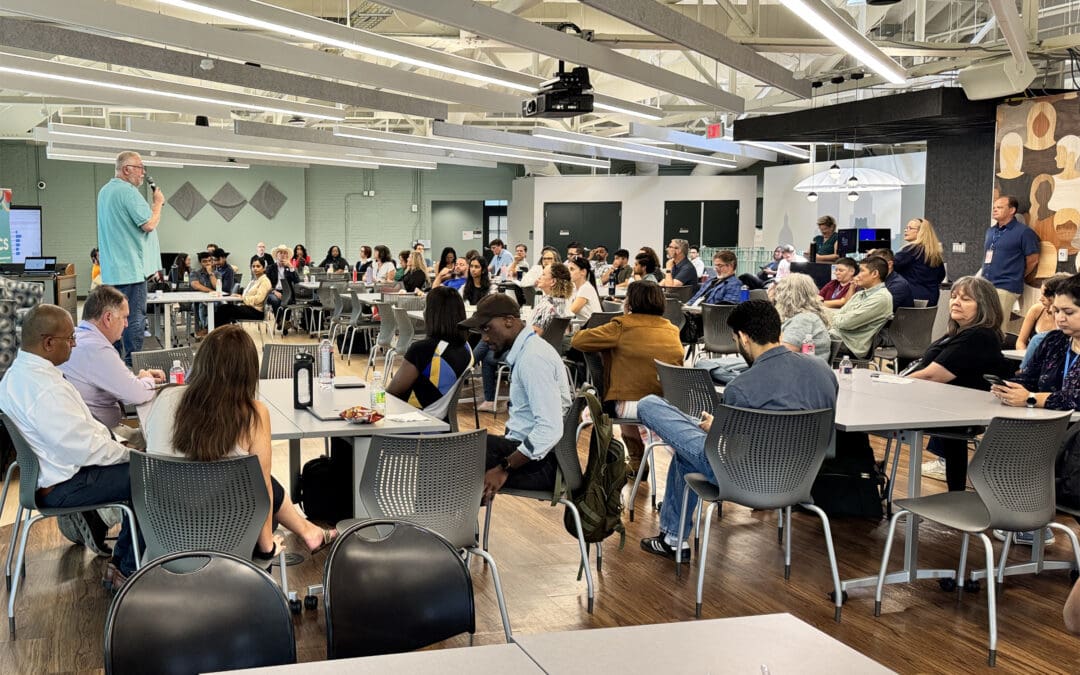
From June 22–24, nearly 100 professionals gathered at The Center for Government and Civic Service (part of Austin Community College’s Rio Grande Campus) for the Austin AI Alliance’s Summer AI Intensive. Attendees arrived from different industries, disciplines, and levels of AI experience, but they shared a common goal: learning how to move beyond the excitement surrounding artificial intelligence and begin applying it in meaningful and responsible ways within their organizations.
By the time the three-day program concluded, 96 participants had earned certificates of completion after learning from 20 industry-leading facilitators. Perhaps most telling, 93 percent of attendees said they would recommend the program to others — a strong endorsement of an experience designed to deliver practical value rather than abstract theory.
What distinguished this year’s Summer AI Intensive was its recognition that AI adoption is not a one-size-fits-all journey. The program was divided into three specialized learning tracks: Leadership, Productivity, and Developer. This allowed participants to focus on the skills most relevant to their roles while still benefiting from the shared energy of a larger AI community.
For business leaders, the Leadership Track explored one of today’s most pressing questions: How do organizations implement AI responsibly while creating lasting business value? Sessions examined agentic AI, governance, organizational readiness, implementation strategies, and the evolving role of executives as AI becomes embedded throughout the enterprise. Rather than presenting AI as another technology initiative, instructors challenged participants to view it as an organizational transformation requiring thoughtful leadership, sound governance, and careful change management.
One attendee summarized the experience well:
“The most valuable thing I learned is too voluminous to keep concise… I learned that my challenges and opportunities are not isolated to my business,” said Timothy Heiges. “Each speaker provided opportunities to overcome these obstacles for me as an individual and inside my organization.”
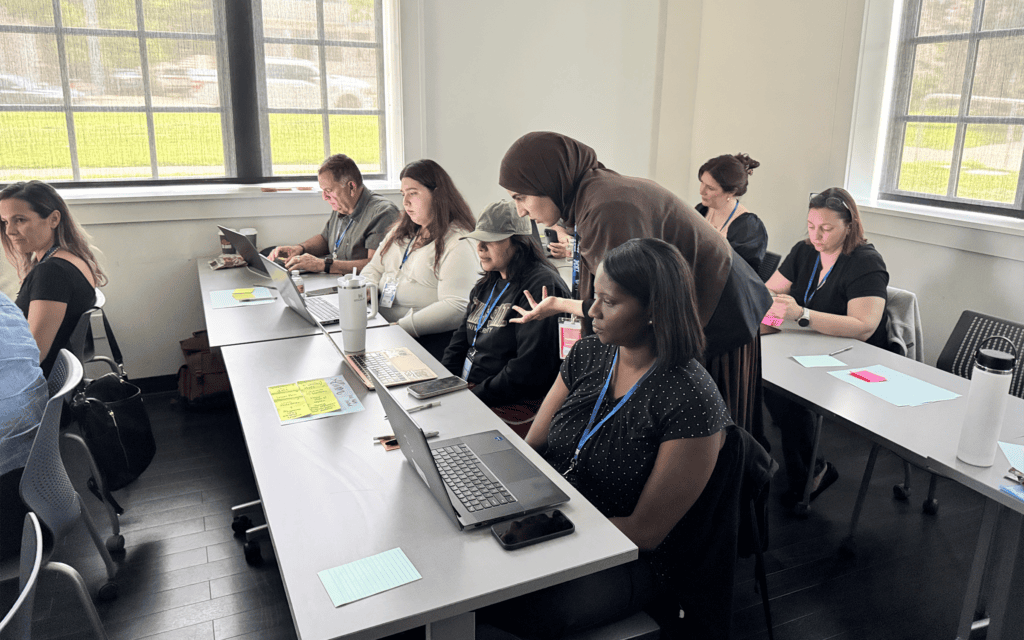
The Productivity Track focused on perhaps the most immediate opportunity AI presents: helping professionals accomplish more today. Participants learned how to integrate AI into their daily workflows through practical prompting techniques, content creation, research, summarization, design assistance, and workflow automation. Rather than chasing the newest tools, attendees developed personalized strategies for making AI a productive partner in the work they already perform.
As Nataly Yagur reflected, “I truly appreciate the ROI of this course. This is exactly what I was looking for. All the virtual classes I looked at tend to be either too technical or too generic. Plus, I really value the classroom setting as an opportunity to connect and have great conversations.”
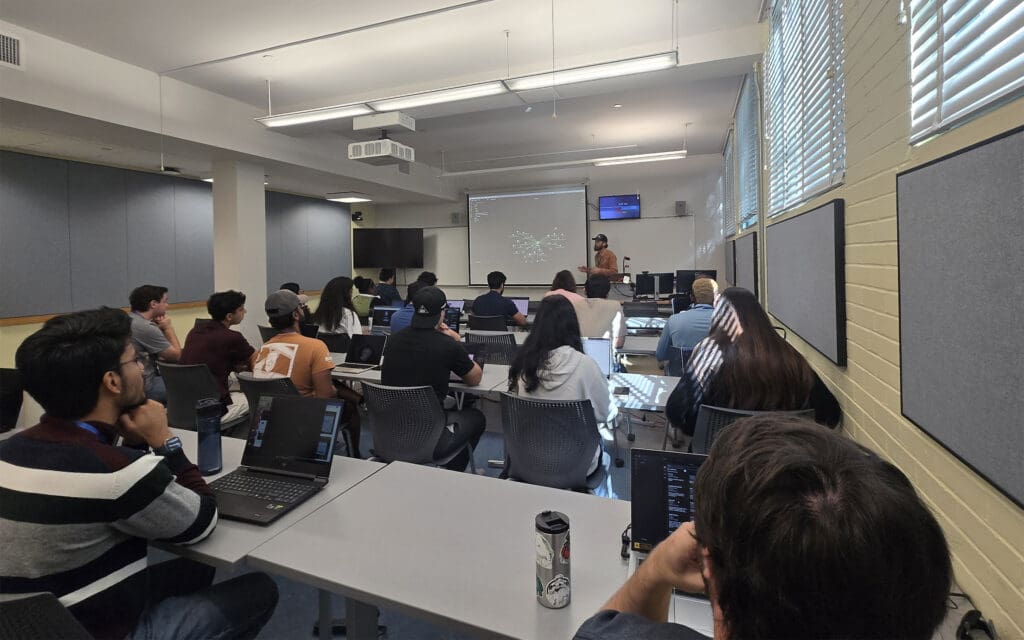
The Developer Track looked toward the technical foundations that will power tomorrow’s AI solutions. Participants explored production-ready AI architectures, evaluation frameworks, secure implementation practices, reasoning models, and modern development workflows. Sessions highlighted emerging tools that help developers build more capable and responsible AI systems while accelerating software development.
One attendee pointed to discovering new development tools, including Obsidian and Claude integrations, as immediately valuable additions to future coding workflows.
Yet some of the event’s most valuable learning occurred outside the formal presentations.
Throughout the three days, conversations continued in hallways, over coffee, and around classroom and lunch tables as participants compared experiences across industries. Business executives exchanged ideas with software developers. First-time AI users learned alongside seasoned practitioners. These interactions reinforced one of the Austin AI Alliance’s greatest strengths: creating a community where knowledge flows in every direction.
As Hannah Ostoja observed, “while I learned a great deal from the many sessions I participated in, I found great value in communicating with the facilitators and my peers. This allowed me to gain insights through new perspectives regarding their workflows, use of AI in the development process, and beliefs and thoughts about existing in the AI age.”
That collaborative spirit reflects the Austin AI Alliance’s broader mission of building an AI ecosystem where education, innovation, and responsible implementation advance together. The Summer AI Intensive was designed not simply to teach new technologies, but to help professionals develop the confidence to use them responsibly within their own organizations.
The technologies introduced during those three days will undoubtedly continue evolving at a remarkable speed. But the curiosity, collaboration, and practical problem-solving fostered throughout the Summer AI Intensive are likely to have an even longer-lasting impact.
As the closing message reminded participants: Be Curious. Be Engaged. Be Empowered. Be Problem Solvers. It was more than a fitting conclusion to three days of learning; it was a roadmap for navigating the future of AI.