
The Austin AI Alliance has many objectives, including advancing AI capabilities through research and development, accelerating AI use across all organizations, building skills and understanding, creating positive social impacts, and much more.
It is also about collaboration and building connections among people with common interests and goals. The AI Alliance creates opportunities for members to meet, find shared obsessions, and build something neither side could have built alone.
That’s exactly what happened when Jenn Clemente and Steve Mudd reconnected through the Alliance and discovered a common thread: both were fascinated by what happens when human imagination meets generative AI, and both believed kids — not just enterprises — deserved a hands-on way to explore that frontier. Out of that connection, a creative and educational partnership was born, with Dreambuilders as its first proof of concept.
Two years ago, Jenn pitched Steve an idea that the two of them couldn’t quite pull off. The technology wasn’t there yet.
On May 8, 2026, it finally was.
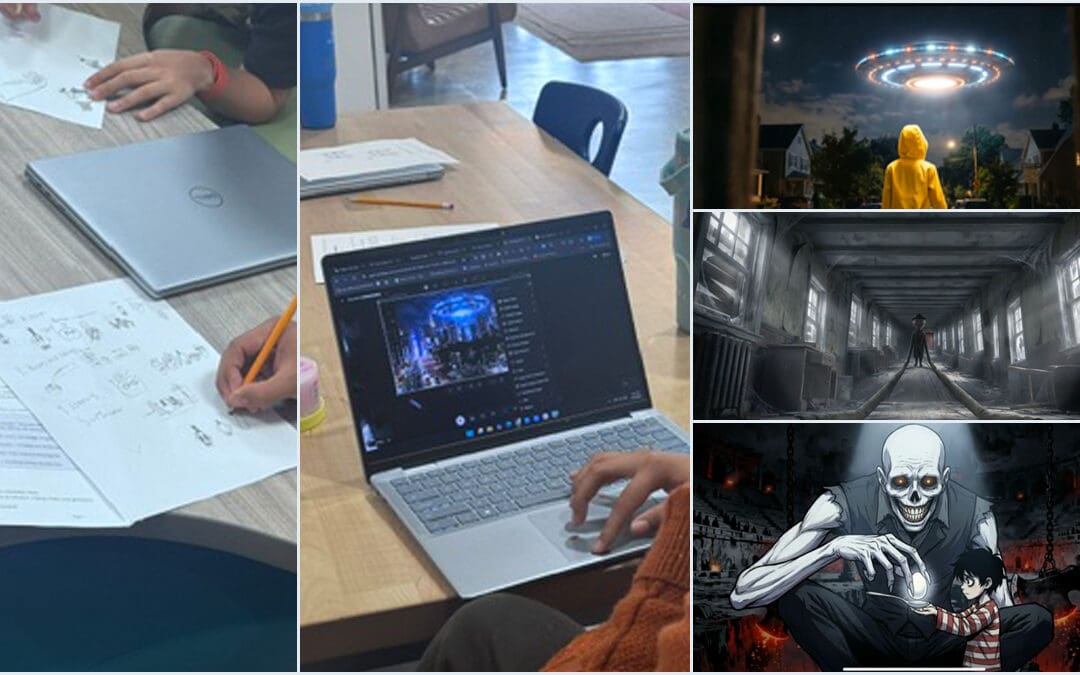
That day, Paige Leigh Fults and her team at the AI-forward Alpha School in Brownsville, Texas, hosted a first-of-its-kind Dreambuilders workshop for students in grades 4 through 8. The facilitated experience, co-led by Jenn and Steve, merged dream literacy with generative AI to guide a room full of kids from dream… to screen.
From Dream Journal to Director’s Chair
It started with a question: “What did you dream about?”
Students were taught how to recall and map their own dreamscapes, then broke into teams to mine those dreams for story elements, including characters, settings, conflicts, and feelings. Then, weave those elements into original storylines. Once the story existed on paper, the teams turned to generative AI, directing tools like Nano Banana, Veo, Kling, and Luma through the Luma Agents platform to bring their dream-built worlds to life on screen.
One team’s script was so complete that the facilitators ran it through the Luma Agent system in full. The result: a three-minute AI-generated short film, built entirely from a roomful of middle-school dreams.
“There were many surprises along the way,” said Clemente, Director of Community Engagement for Ignite Synergy. “This screen-native generation reached for pencils first! Despite a roomful of laptops, they seemed to understand that the dreams needed to be held in the hand before being turned over to machines.”
More importantly, the group made something together that no one could have made alone. When teammates merged their individual dream elements, the synthesis produced storylines that surprised the students themselves: proof that the collision of different inner worlds can generate something genuinely new.
“What struck me most was watching kids tap into their creativity with zero preconceived notions,” added Steve Mudd, founder of Talentless AI. “They weren’t performing for anyone. They were just creating at the speed of imagination.”
Obstacles Became Creative Fuel
When the AI didn’t align with what the students imagined, they didn’t give up. Instead, they adapted, reframed, and kept building. Technical friction turned into a creative constraint, not a dead end.
Precision of thought became precision of output. The more specific students got on paper regarding characters, story, or emotion, the better their AI-generated film turned out.
“In learning to prompt more precisely, they were really learning to think more clearly,” added Clemente.
The students also became unexpected perfectionists, iterating repeatedly until the AI’s images matched what they’d envisioned. Along the way, they were learning something bigger than any single tool: how to communicate with an LLM, and how to advocate for a creative idea until it lands.
The Final Reel
The finished video reel speaks for itself — silliness and wonder on one side, struggle, fear, and raw creative risk on the other. It is not what you’d expect from a room full of middle schoolers.
Which is exactly the point.
Strip away the cynicism around “AI slop,” hand generative video tools to kids who are just playing (not performing for algorithmic attention), and something honest comes out. The Alpha School students and the facilitators who guided them walked away humbled by what they made.
Hear More from the Facilitators
Jenn and Steve go deeper on the process — what worked, what they didn’t expect, and where Dreambuilders goes next — on this episode of AIAF.